PAST NEWSLETTER LINKS
The Storytelling House : Issue No. 04
This week, we’re chatting about your personal brand, and becoming an individual media house.
SURPRISE! YOU’RE A PERSONAL BRAND NOW.
Whether you realized it or not, the moment you showed up online with something to say, something to sell, or something to share, you became something else. And most people building a presence in 2026 are doing it without fully understanding what that something else actually requires. They’re burning out on content that goes nowhere, posting into what feels like a void, wondering why consistent storytelling isn’t translating into growth despite what all the talking heads online are promising.
The problem isn’t effort. It isn’t frequency. It’s that they’re missing the most important part of what this moment requires: a unique identity.
That’s right. People are rewarding you being you. And the algorithms have taken notice.
What You Need To Know.
Like any brand, a personal brand needs to clearly know who they are and what they stand for. They also have to know how their storytelling moves across different distribution channels — traditional or digital. Because all expressions of a brand must lead back to the brand’s identity. If they don’t, the audience becomes confused, trust is broken, and the brand loses credibility. And money.
The best way to understand this is to look at what this means from a brand we know and love.
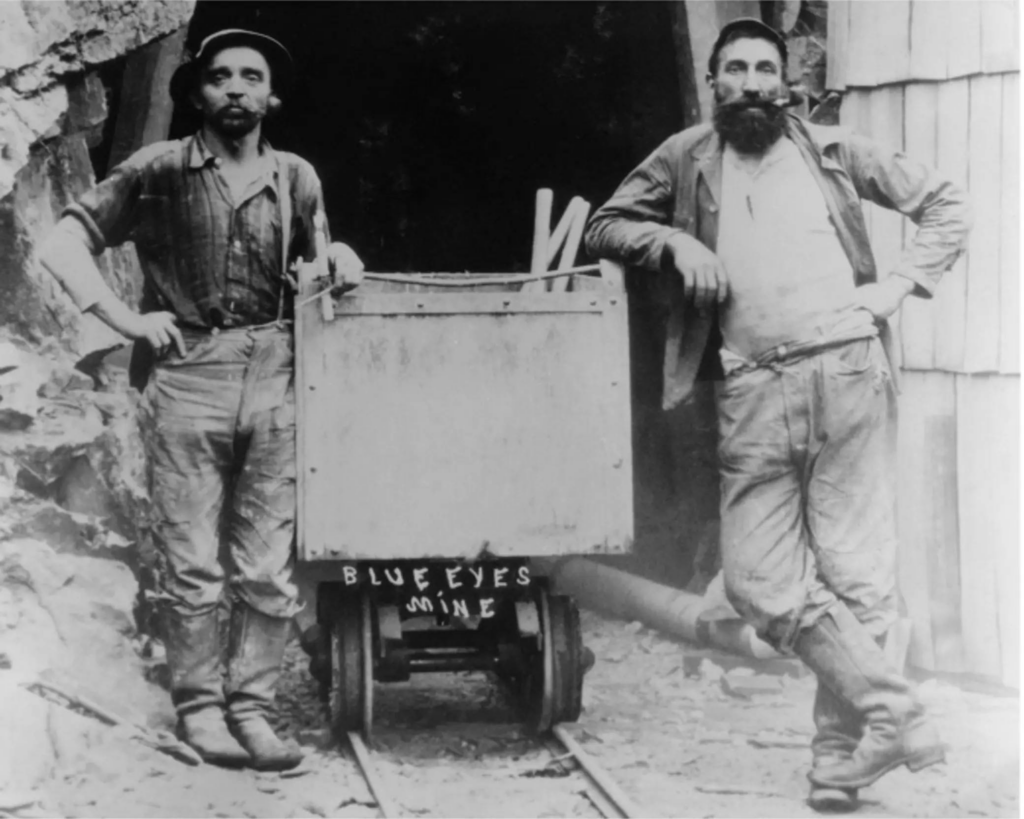
Levi’s was born in 1853 in the California Gold Rush — built for miners and laborers who needed clothing that could take a beating and hold its shape across years of hard use. That origin became an identity: authenticity, durability, something lived-in and earned, the original American denim.
In the mid-1980s, Levi’s tried to expand into tailored men’s suits by launching Tailored Classics — a line of three-piece wool suits, sport coats, and slacks targeting young executives.
It was, by every account, a colossal failure.
Not because the suits were poorly made, but because nobody could reconcile a three-piece wool suit with the brand that had clothed the American working man for a century.
A few years later, Levi’s tried again.
This time they watched where their customer had gone — the baby boomers who had grown up in Levi’s jeans were now sitting in offices, caught between the denim they loved and the suits they resisted — and they built something for that exact in-between.
Can you guess the name of the brand?
The Storytelling House : Issue No. 03
This week, we explore the unexpected force bringing culture into eerie unity, and what Nike’s latest misstep reveals about why a brand’s conviction matters now more than ever.
WHOSE VOICE IS IT ANYWAY?
“We shape our tools, and thereafter our tools shape us.”
— Marshall McLuhan
If you’ve been paying attention, you’ve likely noticed the same ideas, same phrasing, same language and tone showing up across completely different channels from completely different people in completely different conversations and industries, all arriving at the same place at the same time.To the point of it no longer feeling like convergence or alignment.
One month, posts and articles about formation show up everywhere, as if we have collectively rediscovered something foundational that had been sitting unnoticed for years.Then the language shifts, and suddenly it’s storytelling positioned as the answer, the differentiator, the way forward, repeated across voices that have never shared a room.Then it moves again, onto clarity and the value of quieting the noise, and then it’s attention, who owns it, who is losing it, how it is being fragmented, extracted, fought over.
Different topics, same cadence.
Different people, same language.
I’ve noticed these moments happening almost rhythmically – pulling back, then crashing like waves into the rocky shores of culture, where once the jagged edges of disagreement and diversity formed beauty and texture and curiosity. Now they’re cutting in, shaping, eroding what was once distinct until a collective way of thinking is formed. Smooth. Seemingly fluid. Seemingly synergetic in alignment.

And it’s started to rub me the wrong way, feeling less like evolution and more like something we’re not fully aware is happening to us.
It has me asking a different question—
Who is forming who?
We’ve been told, repeatedly, that our inputs are training AI. That everything we write, everything we upload, every prompt we enter is contributing to a system that’s learning from us in real time.
And it’s true.
But it’s only half of the exchange...
Because while we’re shaping the system, the system is shaping us back…
The Storytelling House : Issue No. 02
This week we’re introducing The Storytelling House: an 8-element method to build your personal brand into a multi-media storytelling company. I’m breaking down the full structure, what each element is, and why every single one of them matters.ek we’re talking about why everyone is telling you to become a media company…but how nobody is telling you what that actually requires first.
The brands that are winning are the ones that feel inevitable. The ones whose audiences follow them across every format, every platform, every era.
And it’s not because of their distribution strategy, or because of packed content calendars or posting frequency.
They’re winning because they went in before going out. They built from something deep, solid, and real.
INTRODUCING: THE STORYTELLING HOUSE
An 8-element method to build your personal brand into a multi-media storytelling house.
For over 12 years, I’ve walked into rooms – boardrooms, green rooms, living rooms – with one job: find the real story. Not the polished version. Not the brand-safe version. The one that’s actually true. And to do that, you have to find the real person behind the story.
I’ve done this with professional athletes, actors, executives, and public figures. And every single time, regardless of industry or platform, the same problem exists: people are building their brand on aspiration and surface. Because either:
- They’ve been unwilling to do the deep dive into who they are and what they really believe. To strip away the aspiration and start with something truly honest.
OR - They’re too close. They care so much that they can only view their story and life through subjective lenses and can’t see their narrative identity, brand, or story clearly.
That’s what The Storytelling House changes.
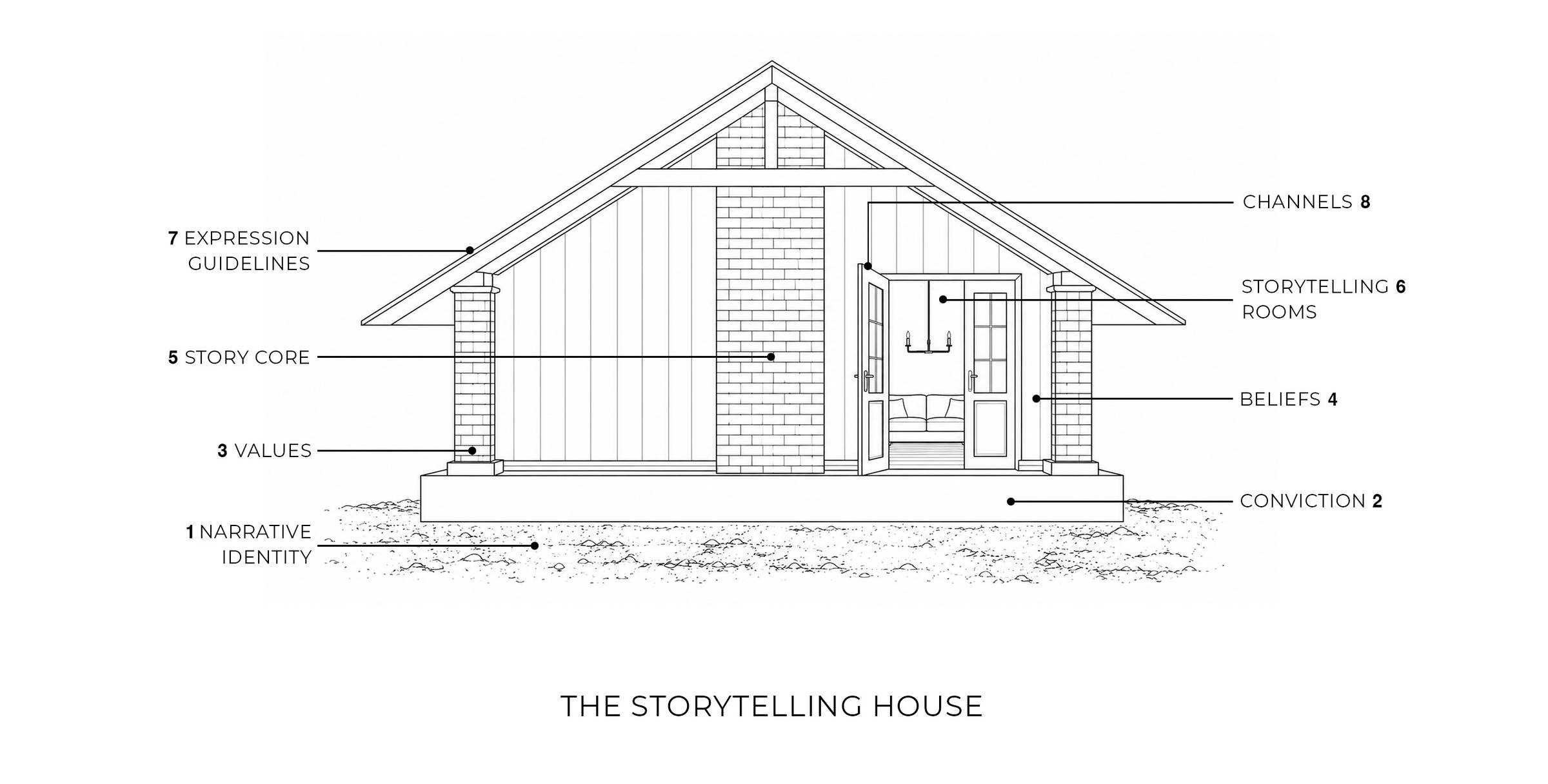
This methodology didn’t come from theory. It came from being in the room. From 12 years of asking the questions no one else was asking, watching people recognize themselves in the answers, and then building entire brands from that foundation up. It’s been refined across formats, tested across industries, and proven over and over again.
Below, I’m introducing you to all 8 elements: what each one is, what it holds, and why leaving any one of them out is exactly why most personal brands feel thin, inconsistent, or impossible to scale.
The Storytelling House : Issue No. 01
This week we’re talking about why everyone is telling you to become a media company…but how nobody is telling you what that actually requires first.
The brands that are winning are the ones that feel inevitable, the ones whose audiences follow them across every format, every platform, every era.
And it’s not because of their distribution strategy, or because of packed content calendars or posting frequency. They are winning because they built one thing before they built anything else.
THE ENERGY DRINK THAT BECAME A MEDIA EMPIRE…AND WHAT IT TEACHES US
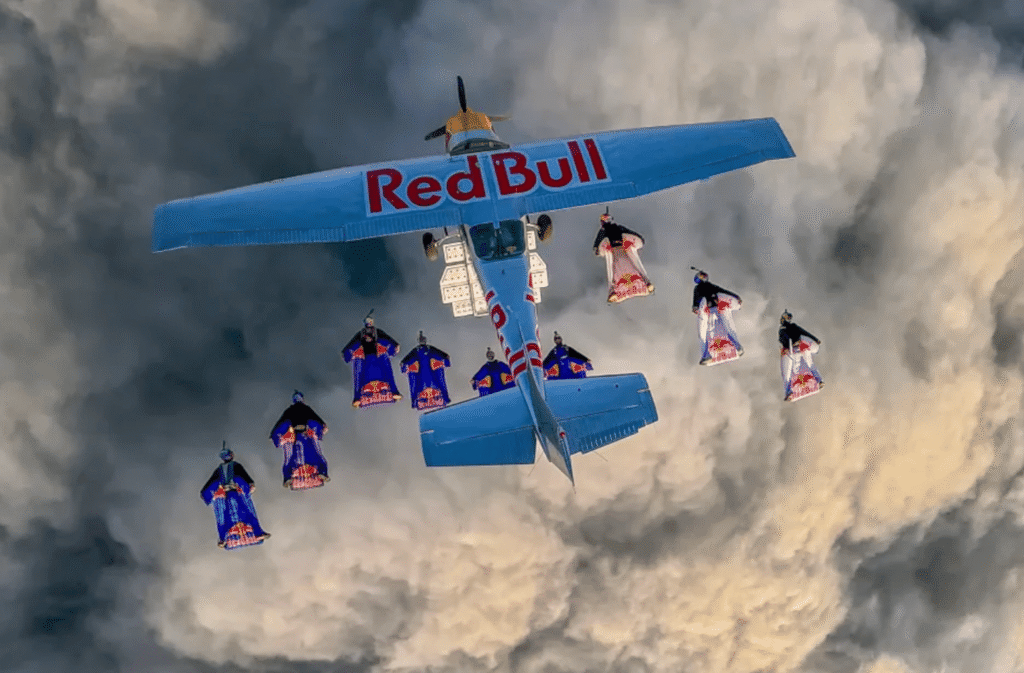
In 1987, a company launched an energy drink in Austria with a modest budget and an immodest conviction: that the brand would not sell a product.
It would embody a way of living.
Red Bull did not become a media empire because it figured out content marketing. It became a media empire because its founder knew exactly what the company stood for. Every piece of content, every sponsored event, every documentary, every magazine, every Formula 1 team was an expression of that singular conviction made visible in the world.
In 2024, Red Bull reported $12.1 billion in net sales — a record, according to Bloomberg. That number comes from the energy drink. The media empire is what makes people care about the drink. It’s reported The Red Bull Media House today generates over $2.5 billion in annual revenue. It produces more than 1,250 events a year across 100 disciplines.
It is, by any honest measure, one of the most successful media operations on earth.
And it sells energy drinks.
The content didn’t create the identity. The identity made the content inevitable. This is what most people miss when they hear “brands are becoming media companies.” They hear a strategy. They hear a format. They hear: start a podcast, launch a newsletter, post more video. What they don’t hear — what nobody is saying clearly enough —
is the prerequisite.
You can’t build a media company without first knowing who the media company is about.